Grower’s Guides
Simple, clear instructions for every corner of the garden
How to get the best from Secret Feeds concentrated feeds, ready-to-use sprays, potting soils and growing media, taken straight from our product labels.
One rule runs through all of it: every Secret Feeds feed is diluted at 5ml per 1 litre of water. For how often to feed, follow the guidance for your product and size.
Guide 1
How to use concentrated feeds
Every Secret Feeds feed is a concentrated liquid. It is mixed with water before use, then applied to the soil, compost or growing medium around the plant, or evenly across the lawn.
- Measure carefully. Every feed is diluted at 5ml per 1 litre of water.
- Always dilute. Never apply the concentrate undiluted, and never exceed the recommended dilution rate.
- Feed onto moist growing media. Most labels ask you to apply the diluted feed to moist soil, compost or growing media.
- Keep to the schedule on the label, and do not feed plants that are dormant.
- Check the size. Some feeds have different instructions for the 500ml and 1 litre bottles.
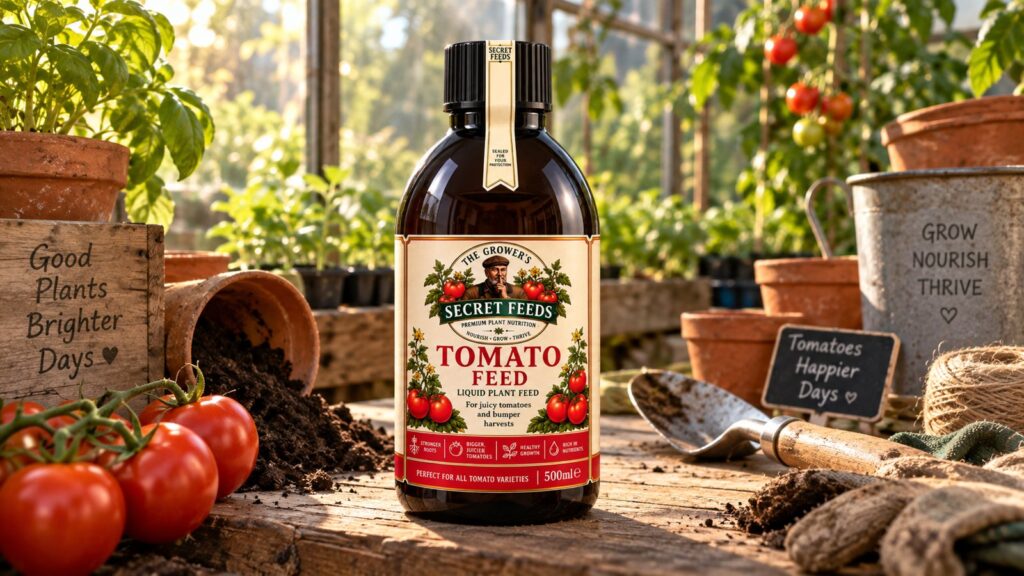
Same name, different bottle
Every feed uses the same dilution, 5ml per 1 litre of water, but some products differ between their 500ml and 1 litre sizes in how often or when to feed: Tomato Feed, Fruit & Veg Feed, Citrus Feed and Orchid Feed. Check the product page for your size.
Guide 2
Feed dilution chart
Every Secret Feeds feed, with its dilution and how often to feed. Tap a product name for full details.
| Feed | Size | Dilution | How often | Label notes |
|---|---|---|---|---|
| All Purpose Feed | 500ml | 5ml per 1 litre of water | Every 7–14 days | While plants are actively growing; reduce in autumn and winter. |
| All Purpose Feed | 1 litre | 5ml per 1 litre of water | Every 7–14 days | Apply to moist growing media during active growth; reduce in autumn and winter. |
| Citrus Feed | 500ml | 5ml per 1 litre of water | Every 7–14 days | Can be used all year round. |
| Citrus Feed | 1 litre | 5ml per 1 litre of water | Every 7–14 days | Early spring to late summer during active growth; reduce in autumn and winter. |
| Ericaceous Feed | 500ml | 5ml per 1 litre of water | Every 14 days | Spring and early summer, to moist compost or soil. Camellias: stop after July. Do not feed dormant plants. |
| Ericaceous Feed | 1 litre | 5ml per 1 litre of water | Every 14 days | Spring and early summer, to moist compost or soil. Camellias: stop after July. Do not feed dormant plants. |
| Fruit & Veg Feed | 500ml | 5ml per 1 litre of water | Every 14 days | During active growth, usually spring to early autumn, to moist soil or compost. Do not feed dormant plants. |
| Fruit & Veg Feed | 1 litre | 5ml per 1 litre of water | Every 7–14 days | Suitable for all-year-round use. |
| Lawn Feed | 500ml | 5ml per 1 litre of water | Every 7–14 days | While the grass is actively growing, when the soil is moist. Not on drought-stressed or dormant lawns, or when frost is expected. |
| Lawn Feed | 1 litre | 5ml per 1 litre of water | Every 7–14 days | While the grass is actively growing. Not when frost is expected or on dormant grass. |
| Orchid Feed | 500ml | 5ml per 1 litre of water | Every 7–14 days | All year round; reduce the frequency when growth slows. |
| Orchid Feed | 1 litre | 5ml per 1 litre of water | Every 7–14 days | Throughout active growth; reduce in winter or when plants are not actively growing. |
| Rose Feed | 500ml | 5ml per 1 litre of water | Every 14 days | Mid-spring until the end of August, to moist soil or compost. Do not feed dormant plants. |
| Rose Feed | 1 litre | 5ml per 1 litre of water | Every 14 days | Mid-spring until the end of August, to moist soil or compost. Do not feed dormant plants. |
| Seaweed Feed | 500ml | 5ml per 1 litre of water | Every 14 days | During active growth, applied to the growing medium. |
| Seaweed Feed | 1 litre | 5ml per 1 litre of water | Every 14 days | During active growth, usually spring and summer, to moist soil or compost. Do not apply to dormant plants. |
| Tomato Feed | 500ml | 5ml per 1 litre of water | Every 7–14 days | From planting through to the end of harvest. |
| Tomato Feed | 1 litre | 5ml per 1 litre of water | Every 10–14 days | Begin when the first fruits start to swell; continue through the cropping period. |
| Tree & Shrub Feed | 500ml | 5ml per 1 litre of water | During active growth, spring to late summer | Apply to moist growing media. Reduce or stop feeding when plants are dormant in autumn and winter. |
| Tree & Shrub Feed | 1 litre | 5ml per 1 litre of water | During active growth, spring to late summer | Apply to moist growing media. Reduce or stop feeding when plants are dormant in autumn and winter. |
Taken from each product page. Every feed is diluted at 5ml per 1 litre of water.
Guide 3
How to use ready-to-use sprays and mists
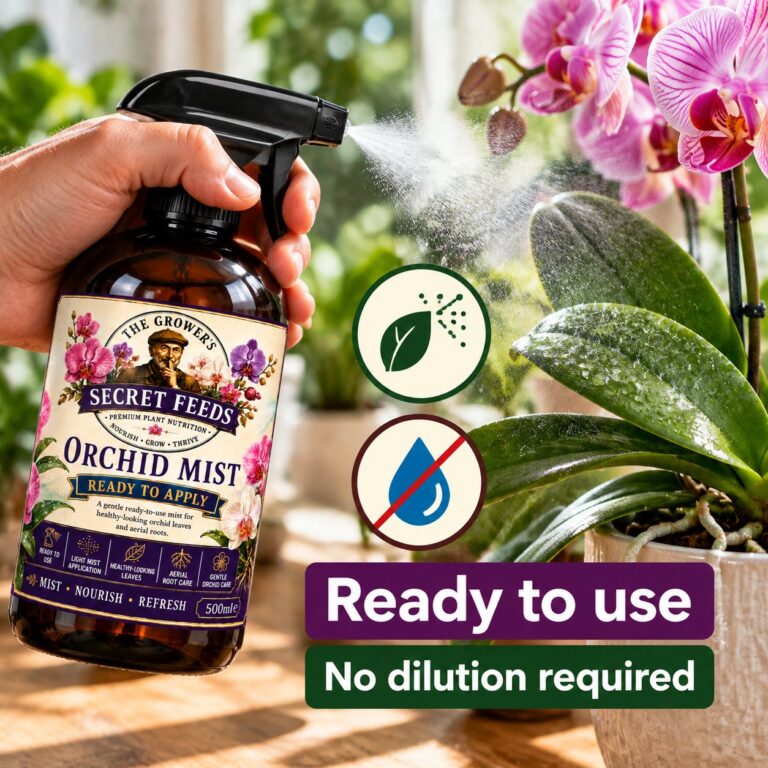
Secret Feeds sprays and mists are ready to use straight from the bottle, with no measuring, mixing or dilution. They are designed for direct application to foliage.
- Shake the bottle before use.
- Spray suitable foliage lightly and evenly, covering the leaves rather than soaking them.
- Apply in the morning, evening or in dull conditions, not in strong direct sunlight.
- Repeat approximately once every 1–2 weeks during active growth, or as your label directs.
| Spray | Best for | How often | Sizes |
|---|---|---|---|
| All Purpose Foliar Spray | Houseplants, ornamental and bedding plants, pots and containers | Approximately once every 1–2 weeks | 500ml · 1 litre |
| Citrus Foliar Spray | Lemon, lime and orange plants in pots and containers | Approximately once every 1–2 weeks | 500ml · 1 litre |
| Ericaceous Mist | Rhododendrons, azaleas, camellias and pieris | Approximately once every 1–2 weeks | 500ml · 1 litre |
| Fruit & Veg Foliar Spray | Fruit and veg in kitchen gardens, allotments and greenhouses | Approximately once every 1–2 weeks | 500ml · 1 litre |
| Orchid Mist | Indoor orchids, including Phalaenopsis | Approximately once every 1–2 weeks | 500ml · 1 litre |
| Rose Mist | Shrub, patio and climbing roses | Approximately once every 1–2 weeks | 500ml · 1 litre |
| Seaweed Foliar Spray | Houseplants, ornamentals and established garden plants | Approximately once every 1–2 weeks | 500ml · 1 litre |
| Tomato Mist | Cordon, bush and cherry tomatoes | Approximately once every 1–2 weeks | 500ml · 1 litre |
Feed or spray?
A concentrated feed is diluted and applied to the growing medium; a spray or mist goes straight onto the leaves. They are different products, each with its own label, so follow the directions for the one you are using.
Guide 4
Choosing a potting soil
Start with the plant. Each Secret Feeds potting mix is a 3 litre blend made for one kind of plant, so the right pouch is usually the one with your plant’s name on it.

Aloe Vera Soil
Blend: Pumice, perlite and bark (peat-free).
Tip: Aloe vera prefers drier conditions, so avoid overwatering.

Bonsai Soil
Blend: Bark, pumice and perlite.
Tip: Check moisture regularly: bonsai may need more frequent watering.

Cactus & Succulent Soil
Blend: Compost, vermiculite, sand and perlite (peat-free).
Tip: Let the compost dry out between waterings, especially in cooler months.

Carnivorous Plant Soil
Blend: A low-feed mix that holds moisture.
Tip: Water with rainwater or distilled water; avoid ordinary fertiliser and tap water.

Chilli & Pepper Soil
Blend: Compost, perlite, vermiculite and sand (peat-free).
Tip: Harvest ripe chillies and peppers regularly through the season.

Citrus Soil
Blend: Compost, perlite, vermiculite and sand (peat-free).
Tip: Give it a bright, sunny spot and feed during the growing season.

Herb Soil
Blend: Compost, vermiculite, sand and perlite (peat-free).
Tip: Harvest regularly to encourage fresh growth.

Houseplant Soil
Blend: Compost, vermiculite, sand and perlite (peat-free).
Tip: Allow the compost to dry out slightly between waterings.

Orchid Potting Mix
Blend: Pine bark and perlite.
Tip: Keep the crown above the mix and leave aerial roots uncovered.

Tomato Soil
Blend: Compost, vermiculite, sand and perlite (peat-free).
Tip: Check moisture often in warm weather and in larger containers.
Potting up
- Use a clean container with drainage holes.
- Fill with the mix, gently firm and level it, then plant.
- Water thoroughly and let excess water drain away. Do not leave pots standing in water.
- For Herb, Chilli & Pepper, Citrus and Aloe Vera Soil, the label says: once established, feed during active growth with a suitable plant feed, following the instructions on the product.
Carnivorous plants are different
Keep Carnivorous Plant Soil consistently damp during the growing season, water with rainwater or distilled water, and stand bog plants in a shallow tray of suitable water as needed. Avoid ordinary fertiliser and tap water.
Orchids
Use a clean orchid pot with drainage holes (a clear pot helps you check the roots). Keep the crown above the mix, leave aerial roots uncovered, and never leave the pot standing in water.
Guide 5
Using growing media
Growing media are mixed into compost, potting mixes or garden soil to change how it holds air and water. All four are made in Britain.
Perlite
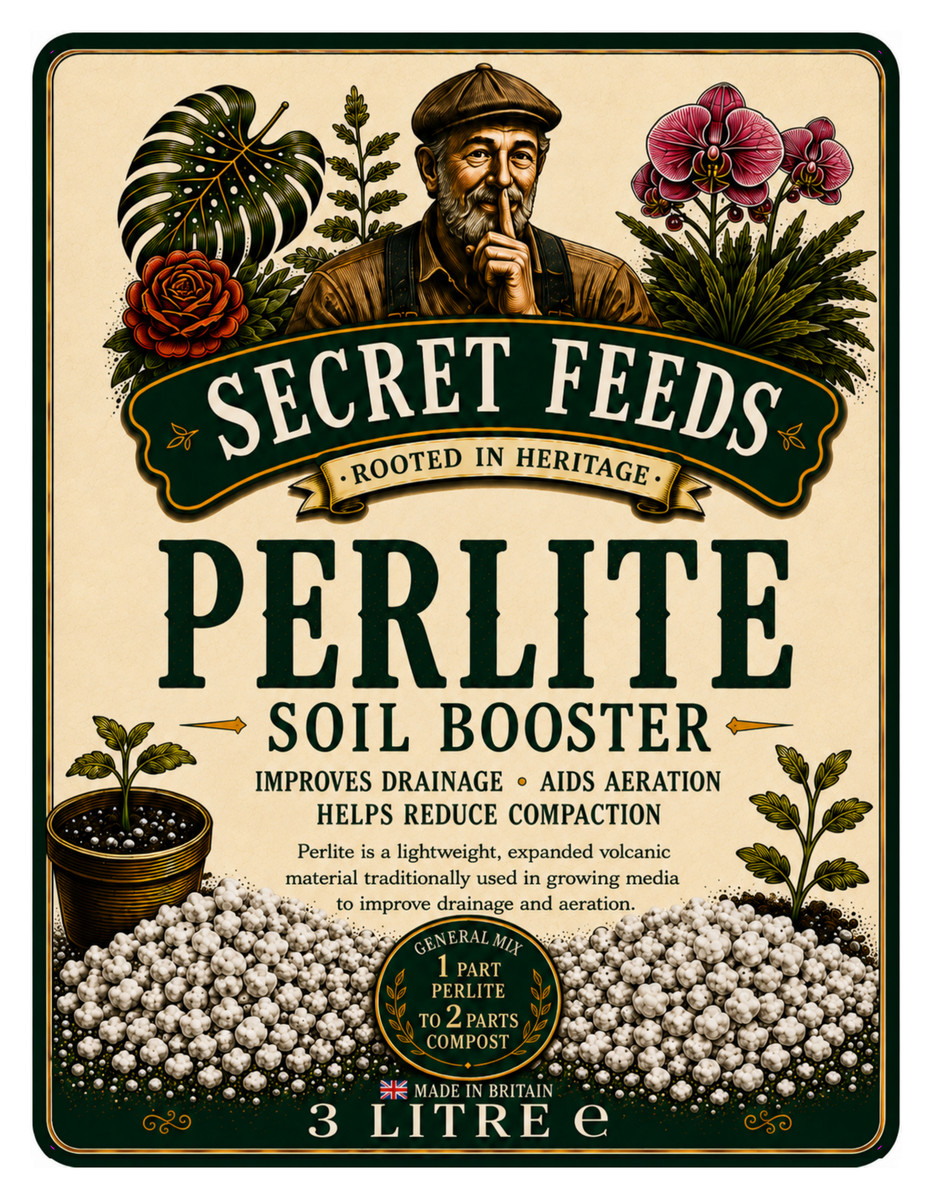
A lightweight, expanded volcanic material that improves drainage and aeration and helps prevent compaction.
- General use: mix 1 part perlite with 2 parts compost.
- Propagation and cuttings: mix 1 part perlite with 1 part peat-free multipurpose compost (50:50).
- 1 litre of perlite makes approximately 3 litres of general-use mix.

Vermiculite
A lightweight hydrated mineral that absorbs and retains moisture, and is ideal for seed sowing, cuttings and propagation.
- General use: mix 1 part vermiculite with 2–3 parts compost or soil.
- 20 litres of vermiculite makes approximately 40–60 litres of finished mix.
- Adjust the amount for the moisture retention and aeration your plants need.

Clay Pebbles
Expanded balls of clay, fired at high temperatures, that improve aeration and drainage. Stable, long lasting and reusable.
- Rinse thoroughly before use to remove dust and fine particles.
- Mix into compost, use as a decorative top dressing, or use to help lighten heavy soils. There is no fixed ratio: add as required.
- To reuse, clean them and allow them to dry first.

Biochar
A carbon-rich soil amendment that can improve soil structure, water retention, drainage and aeration, and provide habitat for beneficial soil microbes.
- Mix 1 part biochar with 19 parts soil and incorporate thoroughly: 1 litre treats approximately 19 litres of soil.
- Use it as a growing media additive, or as a soil improver in garden beds, planters and borders.
- Always check the rate printed on your pack.
Which one?
Perlite for drainage and air, vermiculite to hold moisture, clay pebbles for drainage and top dressing, and biochar to improve soil structure.
Guide 6
Through the seasons
There is no single calendar for every plant, but the labels share some common ground. Feeds and sprays are mainly used while plants are actively growing.
Spring and summer
The main feeding season
Rose Feed runs every 14 days from mid-spring until the end of August. Ericaceous Feed is for spring and early summer, and camellias stop after July. Seaweed Feed 1 litre is usually used in spring and summer, and Tomato Feed 1 litre starts when the first fruits swell.
Autumn and winter
Ease off
As growth slows, reduce or stop feeding: All Purpose Feed, Citrus Feed 1 litre, Orchid Feed 1 litre and Tree & Shrub Feed all say so. Several labels say not to feed dormant plants, and Lawn Feed should not be applied when frost is expected.
All year round
The exceptions
Citrus Feed 500ml, Orchid Feed 500ml and Fruit & Veg Feed 1 litre are labelled for use all year round, so check your bottle before you put it away for winter.
Ready when you are
Find the right product for your plants
Browse by category, or find a Secret Feeds stockist.