How often to feed houseplants in winter depends on whether they are still actively growing. Most houseplants need little or no feed during winter because shorter days and cooler conditions slow growth. However, plants kept in warm, bright rooms may continue growing and can need occasional feeding.
I find winter is the time to watch your plants rather than feed by habit. Check the growing conditions first, then adjust your routine so your plants get what they need without unnecessary feeding.
How often to feed houseplants in winter?
The simple answer is that most houseplants need less feed in winter than they do during spring and summer. When growth slows, plants use fewer nutrients, so regular feeding can often be reduced or paused.
Secret Feeds All Purpose Feed 1 Litre is suitable for houseplants, flowers, fruit, vegetables, herbs, shrubs and general garden plants. For houseplants, reduce feeding during autumn and winter or whenever plants are not actively growing.
The RHS advises that houseplants need the right balance of light, watering and feeding throughout the year. You can read their guidance on how to grow houseplants for more general care information.
Why do houseplants need less feed in winter?
During winter, many houseplants enter a slower period because there is less daylight. As a result, they often produce fewer new leaves and use fewer nutrients from the growing media.
However, every home is different. A houseplant sitting beside a bright window in a warm room may continue producing new growth, while another plant in a cooler corner may slow down considerably.
The RHS explains that nutrient uptake happens through plant roots, and feeding is usually reduced when plants are not actively growing. Their guide on how plants absorb nutrients explains more about this process.
How can you tell if your houseplant is still growing?
Before deciding how often to feed houseplants in winter, look closely at the plant itself. New leaves, fresh shoots or expanding growth usually show that the plant remains active.
- Look for new leaves appearing from the growing points.
- Check whether stems are extending or producing fresh shoots.
- Notice whether the plant receives strong natural light or extra warmth indoors.
- Reduce feeding if growth has clearly slowed.
Meanwhile, avoid feeding a plant simply because the calendar says it is time. The plant’s condition matters more than a fixed schedule.
How do you adjust your winter feeding routine?
Changing your routine does not need to be complicated. Instead, make small adjustments and observe how your plants respond.
- Check whether your plant is actively growing before adding feed.
- Reduce or pause feeding if the plant has stopped producing new growth.
- Keep watering suitable for the plant and avoid keeping compost constantly wet.
- Restart a regular feeding routine when active growth returns.
For many indoor plants, spring brings increasing daylight and stronger growth. At that point, you can gradually return to a more regular feeding pattern.
Should you repot houseplants during winter?
Winter is not always the ideal time for major changes because many plants are growing slowly. However, if a plant needs a fresh growing medium, choosing a suitable mix can help prepare it for future growth.
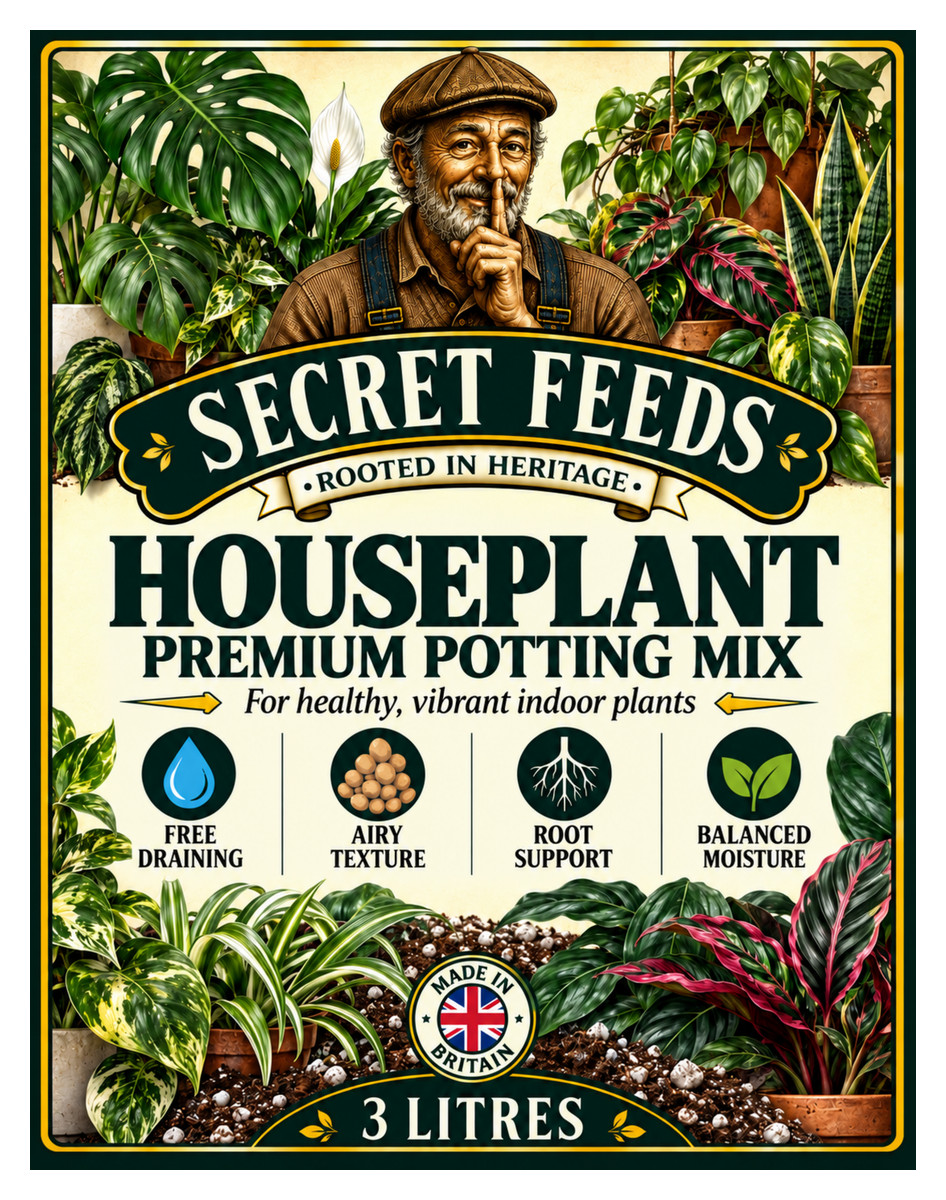
Secret Feeds Houseplant Soil is a peat-free, free-draining premium potting mix made from compost, vermiculite, sand and perlite. It is suitable for a wide range of houseplants in pots and containers.
You can explore Secret Feeds Houseplant Soil or read the Grower’s Guide to choosing a potting soil for more advice on selecting growing media.
Which Secret Feeds products can help with winter houseplant care?
When considering how often to feed houseplants in winter, remember that products are most useful when they match the plant’s current growth. If your plants are still actively growing indoors, a suitable feed can support your normal care routine.
Secret Feeds All Purpose Feed 500ml is a versatile concentrated liquid plant feed for a wide range of indoor and outdoor plants. It is suitable for houseplants, ornamental plants, bedding plants, pots, containers and general garden plants where a general-purpose liquid feed is appropriate.
Secret Feeds All Purpose Feed 1 Litre is a concentrated liquid feed for houseplants, flowers, fruit, vegetables, herbs, shrubs and general garden plants. For active growth, Secret Feeds liquid feeds use a dilution of 5ml per 1 litre of water. You can find the product details for Secret Feeds All Purpose Feed 1 Litre.
Secret Feeds Seaweed Feed 500ml is a concentrated liquid seaweed feed for a wide range of indoor, outdoor and container-grown plants. You can also view Secret Feeds Seaweed Feed 500ml for more details.
The guide to using concentrated feeds explains measuring, diluting and applying feeds correctly. You can explore the full range of plant feeds or find Secret Feeds through selected garden centres in Lancashire and Cheshire on the Stockists page.
FAQs
How often to feed houseplants in winter?
Most houseplants need little or no feed in winter because growth slows. Plants that continue growing in warm, bright rooms may need occasional feeding.
Can I feed houseplants during winter?
Yes, but only when plants are actively growing. Reduce feeding during autumn and winter when growth slows.
Should I stop feeding indoor plants in winter?
It depends on the plant and its growing conditions. Check whether it continues producing new growth before deciding.
When should I start feeding houseplants again?
Many plants can return to a regular feeding routine when daylight increases and active growth begins again.
Winter plant care is mostly about observation. I’d keep an eye on light, watering and growth, then adjust feeding when your plants tell you they are ready. For more seasonal advice, explore The Grower’s Guides and keep your plants growing steadily through the year.
Comments are closed